
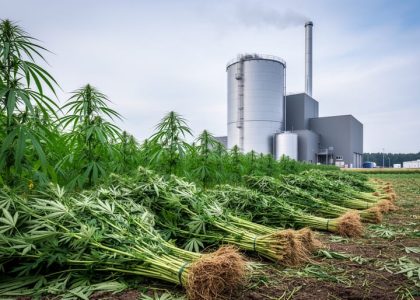
What Is Hemp Bioenergy (and How Does It Drive Renewable Sustainability)?
Hemp bioenergy refers to the conversion of hemp biomass into renewable fuels and power, transforming agricultural residues, leftover stalks, seeds, and even waste from cannabinoid products manufacturing into sustainable energy sources. As the renewable energy sector expands in 2026, hemp has emerged as a versatile feedstock capable of producing biodiesel, bioethanol, biogas, and solid biomass pellets, offering a carbon-neutral alternative to fossil fuels while addressing agricultural waste challenges.
The convergence of hemp cultivation and renewable energy innovation addresses two critical global needs at once. Industrial hemp grows rapidly, requires minimal chemical inputs, and absorbs significant atmospheric carbon dioxide during its …