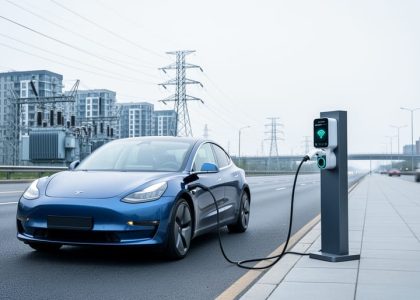

A maintenance mindset in vehicle ownership is the deliberate practice of extending a car’s service life through systematic care and repair rather than replacing it with a newer model. For energy-conscious owners, this approach represents a practical intersection of environmental stewardship and economic prudence, challenging the assumption that sustainability always requires buying the latest technology.
The environmental case for maintaining existing vehicles has grown stronger as researchers quantify the embodied energy locked in automotive manufacturing. Building a new car, even an electric one, requires extracting raw materials, operating energy-intensive factories, and managing complex global supply chains. A 2024 lifecycle analysis from MIT’s Mobility Lab found that manufacturing accounts for roughly 20 to 30 percent of a vehicle’s total lifetime emissions. Keeping a well-maintained combustion engine car on the road can, in many scenarios, produce fewer total emissions over a five-year period than manufacturing and operating a replacement vehicle, particularly when the existing car is driven modestly and serviced correctly.
This reality has fueled a quiet shift among environmentally aware drivers who view their garages as extension projects rather than showrooms. They reduce landfill waste by preventing premature disposal of functional vehicles and their thousands of component parts. The maintenance mindset isn’t about clinging to obsolete technology out of nostalgia. It’s a calculated strategy grounded in systems thinking, recognizing that the most sustainable vehicle is often the one already built.
This article examines how the maintenance mindset operates in practice, which maintenance components deliver the greatest longevity returns, and where targeted upgrades like ceramic coating for wheels fit into a comprehensive preservation strategy. Real-world case studies and global policy trends illuminate how this philosophy is reshaping vehicle ownership beyond individual driveways.
What the Maintenance Mindset Means for Vehicle Owners
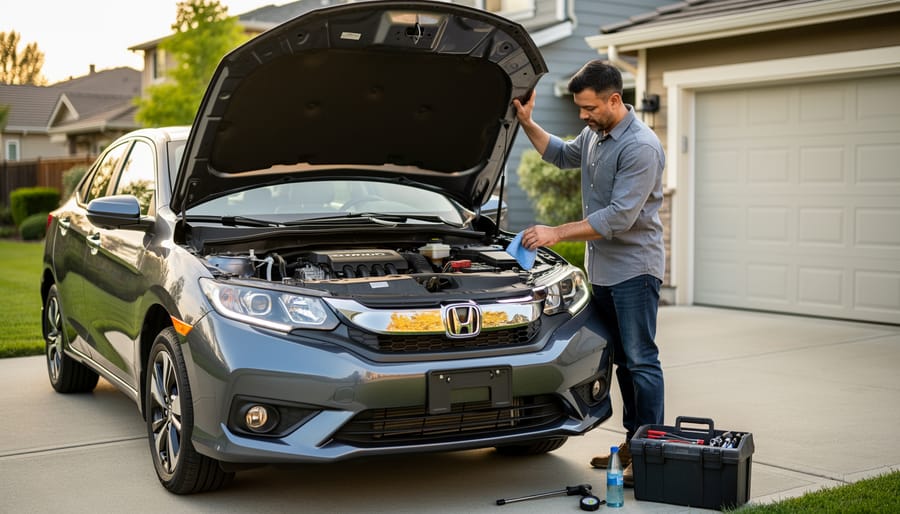
The maintenance mindset represents a fundamental shift in how vehicle owners approach their relationship with their cars, trucks, and motorcycles. Rather than treating vehicles as disposable commodities to be replaced at the first sign of wear or when a newer model catches your eye, this philosophy centers on proactive care, thoughtful stewardship, and long-term value preservation. At its core, it’s the recognition that the vehicle you already own is a complex asset worth protecting through consistent, informed maintenance rather than premature replacement.
This approach stands in direct opposition to the consumer culture that has long dominated automotive markets, where planned obsolescence and frequent upgrades generate enormous waste streams and environmental costs. Vehicle owners who embrace the maintenance mindset understand that each new vehicle carries a hidden environmental burden far beyond its sticker price. The manufacturing process alone requires massive energy inputs, raw material extraction, transportation across global supply chains, and eventual disposal of the replaced vehicle. By extending the useful life of existing vehicles through systematic care, owners avoid triggering this entire resource-intensive cycle.
Several foundational concepts underpin this philosophy:
- Maintenance Mindset
- A proactive approach to vehicle ownership that prioritizes systematic care and lifecycle value over reactive repairs and premature replacement. This philosophy treats vehicles as long-term investments requiring ongoing stewardship rather than short-term consumer goods.
- Embodied Energy
- The total energy consumed throughout a vehicle’s manufacturing process, from raw material extraction through assembly and delivery. This hidden environmental cost often exceeds the fuel or electricity a vehicle will consume during its first several years of operation.
- Lifecycle Thinking
- An analytical framework that considers a vehicle’s total environmental and economic impact from production through disposal, rather than focusing solely on operational efficiency or purchase price. This perspective reveals that extending vehicle lifespan often yields greater sustainability benefits than upgrading to newer technology.
- Resource Stewardship
- The practice of protecting and preserving existing assets through informed decision-making and responsible care. In vehicle ownership, this means treating your car as a valuable resource that merits protection rather than a disposable item.
- Preventive Maintenance
- Scheduled service activities performed before problems arise, designed to prevent failures and extend component lifespan. This proactive approach contrasts with reactive repairs that address issues only after they’ve caused damage or breakdowns.
For energy-conscious owners, the maintenance mindset aligns perfectly with broader environmental values. These individuals recognize that sustainability isn’t just about choosing electric over gasoline or renewable over fossil fuels. It encompasses the full spectrum of resource decisions, including whether to keep what you have or manufacture something new. When a well-maintained vehicle can serve reliably for fifteen years instead of eight, the environmental mathematics change dramatically. Fewer vehicles need manufacturing, less material enters landfills, and the embodied energy already invested in your existing vehicle continues delivering value rather than being written off prematurely.
How the Maintenance Mindset Works in Practice
The Energy Cost of Vehicle Replacement
Manufacturing a new vehicle consumes enormous amounts of energy long before the first key turn. The typical passenger car embeds roughly 20,000 to 30,000 kilowatt-hours of energy in its production, equivalent to several years of driving for an average vehicle. This figure accounts for mining raw materials, refining metals, fabricating components, and assembling the final product across global supply chains.
Steel production alone generates approximately 1.8 tons of CO₂ per ton of material. An average vehicle contains about 900 kilograms of steel, alongside substantial quantities of aluminum, plastics, and rare earth elements for electronics and batteries. Extracting lithium, cobalt, and nickel for electric vehicle batteries adds further environmental burden, with mining operations consuming massive energy inputs and leaving lasting ecological footprints in extraction regions.
Transportation amplifies these costs. Components cross oceans multiple times during production, with final vehicles shipped from factories to dealerships, each stage burning fossil fuels. A vehicle manufactured overseas and delivered to North American or European markets might accumulate thousands of transport kilometers before its odometer registers a single mile.
Disposal creates another energy debt. Recycling captures perhaps 75% of a vehicle’s materials, but the process itself demands significant energy. The remaining 25%, plastics, composites, contaminated fluids, often ends up in landfills or requires energy-intensive treatment.
These production realities explain why a well-maintained 15-year-old vehicle can have a smaller lifetime carbon footprint than a brand-new model, even one with superior fuel efficiency. The energy already invested in your existing vehicle represents sunk environmental cost. Extending its operational life amortizes that investment over more years and miles, delaying the substantial energy penalty of manufacturing its replacement.
For energy-conscious owners, the calculation becomes clear: every additional year of reliable service from a current vehicle avoids the embodied energy cost of premature replacement, making proactive maintenance an environmental strategy, not just an economic one.
Data-Driven Maintenance Strategies
Modern vehicles generate continuous streams of data that transform maintenance from guesswork into precision science. Onboard diagnostics systems monitor dozens of parameters in real time, engine temperature, battery voltage, brake pad thickness, tire pressure, fluid levels, and flag anomalies before they escalate into failures. For energy-conscious owners, this data infrastructure enables maintenance decisions based on actual component condition rather than arbitrary mileage intervals.
Telematics platforms aggregate vehicle data and translate it into actionable maintenance schedules. A 2025 study of fleet operators found that telematics-guided maintenance reduced unplanned downtime by 47 percent while extending average vehicle service life by three years. Individual owners can access similar capabilities through OBD-II dongles and smartphone apps that track maintenance history, decode diagnostic trouble codes, and predict upcoming service needs based on driving patterns and component wear rates.
Electric vehicles amplify these capabilities. Battery management systems continuously monitor cell health, charging cycles, and thermal performance, providing owners with granular visibility into their most valuable component. Regenerative braking systems report pad wear far more accurately than conventional vehicles, often extending brake life to 100,000 miles or beyond while the software alerts owners to the precise moment intervention becomes necessary.
The shift from calendar-based to condition-based maintenance eliminates unnecessary service while catching genuine problems early. A transmission doesn’t care that it’s been three years since the last fluid change; it cares about operating hours, temperature exposure, and contamination levels. Sensors and software measure what actually matters, allowing owners to maintain precisely what needs attention while avoiding premature part replacement, a dual win for both vehicle longevity and resource conservation.
Key Components of a Comprehensive Maintenance Program
Powertrain Preservation
The powertrain represents the heart of any vehicle’s operation, and its preservation determines whether your car, truck, or EV remains viable for decades or becomes landfill fodder within years. Energy-conscious owners recognize that different powertrain architectures demand distinct maintenance approaches, yet all share a common principle: consistent, informed care prevents the catastrophic failures that prematurely end vehicle life.
Internal combustion engines require regular oil changes using high-quality lubricants matched to operating conditions, synthetic oils typically extend drain intervals while providing superior protection. Air filter replacement maintains optimal combustion efficiency, preventing excessive fuel consumption that wastes both money and resources. Timing belt or chain service according to manufacturer intervals prevents engine destruction, while spark plug replacement ensures complete combustion and minimal emissions. Cooling system maintenance, fresh coolant, pressure testing, and thermostat verification, prevents overheating that accelerates wear across all engine components.
Electric powertrains eliminate most traditional maintenance but introduce new considerations. Motor bearings and reduction gear lubricants require inspection on extended intervals. Thermal management systems for motors and inverters need coolant changes, though less frequently than combustion engines. Hybrid systems combine both worlds, requiring attention to both engine and electric components plus the complex power-split devices that coordinate them.
Transmission care proves critical regardless of powertrain type. Automatic transmissions benefit from fluid and filter changes well before manufacturer “lifetime fill” claims suggest, particularly in stop-and-go driving or towing. Manual transmissions need clutch inspections and gear oil changes. EV single-speed transmissions still require periodic lubricant checks.
Drivetrain preservation extends to differential service, CV joint inspection, and driveshaft maintenance, unglamorous work that prevents expensive replacements.
Safety and Structural Systems
Safety-critical systems demand attention not just for occupant protection, but because their degradation compromises the entire vehicle’s viability. Brakes require regular inspection of pads, rotors, calipers, and fluid, worn components reduce stopping power and generate excessive heat that damages adjacent systems. Suspension components absorb road impacts that would otherwise stress the chassis; failing bushings, shocks, or struts accelerate wear throughout the structure and create handling unpredictability. Steering linkages translate driver input into directional control; any looseness or binding introduces dangerous imprecision.
Tires represent the sole contact patch between vehicle and road. Proper inflation, rotation, and alignment prevent uneven wear that shortens tire life and increases rolling resistance, degrading efficiency in ways that matter as much to conventional vehicles as those relying on EV charging infrastructure or AI energy management for optimal range.
Chassis protection, rust prevention, undercoating, and structural inspections, defends the foundation supporting all other systems. Corrosion spreads silently, eventually rendering an otherwise functional vehicle structurally unsound and unrepairable, forcing premature replacement regardless of powertrain condition.
Battery and Electrical Care
Battery health sits at the heart of modern vehicle reliability, whether you’re managing a conventional 12-volt system or an electric vehicle’s traction pack. For energy-conscious owners, understanding electrical care means protecting one of the most expensive and environmentally intensive components in your vehicle.
In conventional cars, the starter battery powers ignition and accessories. Regular terminal cleaning prevents corrosion that creates resistance and heat. Testing voltage quarterly catches decline before you’re stranded, healthy batteries maintain 12.6 volts at rest. Heat accelerates degradation, so park in shade when possible and ensure the charging system isn’t overworking the battery with voltages exceeding 14.7 volts.
Electric vehicles demand more sophisticated battery stewardship. Lithium-ion packs degrade through calendar aging and charge cycles, but smart habits preserve capacity. Maintain charge between 20-80% for daily use rather than repeatedly charging to 100%, which stresses cells. Precondition batteries before fast charging in cold weather to reduce thermal shock. Some EVs lose 2-3% capacity annually with aggressive charging habits versus under 1% with gentler practices.
Charging infrastructure matters too. Level 2 home chargers paired with solar arrays provide the cleanest, most controlled charging environment. Monitor for firmware updates that optimize battery management algorithms, manufacturers continually refine charging curves based on fleet data.
Electrical connectors throughout both vehicle types benefit from dielectric grease application during inspections, preventing moisture intrusion that causes phantom electrical faults and component failures.
Real-World Applications and Benefits
Economic and Environmental ROI
A well-maintained vehicle delivers compelling returns on both economic and environmental fronts, often contradicting conventional wisdom about replacement timing. The average new vehicle purchase in North America costs $48,000 as of 2026, with financing adding thousands more in interest. By contrast, systematic maintenance, even including occasional major repairs, typically runs $1,200 to $2,500 annually for conventional vehicles and $800 to $1,800 for electric models. Over a decade, keeping an existing vehicle with diligent care costs roughly one-third of purchasing new, even accounting for decreased fuel efficiency in aging combustion engines.
The environmental calculus proves equally decisive. Manufacturing a single new vehicle generates 6 to 35 metric tons of carbon dioxide equivalent, depending on size and type. Electric vehicles carry particularly high production emissions due to battery manufacturing, with some studies showing 8 to 12 tons of CO2e just for the battery pack. A well-maintained existing vehicle avoids this embodied carbon entirely.
Consider a ten-year-old sedan driven 12,000 miles annually. If properly maintained, it might produce 5.5 tons of operational emissions yearly through fuel consumption. A new efficient model might cut that to 4 tons annually, saving 1.5 tons per year. However, the new vehicle’s 8-ton manufacturing burden means it takes five years just to break even environmentally. During those five years, the maintained older vehicle proves the greener choice.
This analysis becomes more favorable for EVs charged with renewable energy, where operational emissions approach zero and longevity maximizes the amortization of production impacts. Fleet data increasingly shows that vehicles maintained to manufacturer specifications routinely exceed 200,000 miles with original major components intact, fundamentally challenging replacement-centric ownership models.
Integration with Renewable Energy Systems
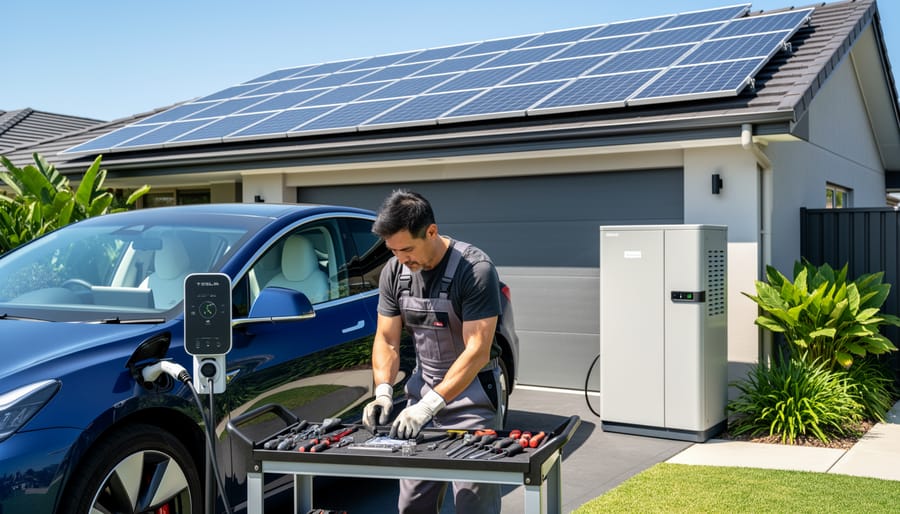
Maintenance-minded vehicle owners frequently extend their resource stewardship beyond the vehicle itself, creating integrated systems where well-maintained cars become active participants in household energy management. Many pair their vehicles with home solar charging infrastructure, capturing daytime photovoltaic generation to power electric or plug-in hybrid vehicles overnight. This combination maximizes the environmental return on both investments: solar panels generate clean electricity for decades, while properly maintained vehicles use that power efficiently over extended lifespans.
Smart charging systems allow owners to program vehicle charging during periods of excess solar production or low grid demand, reducing strain on electrical infrastructure while minimizing carbon footprint. Vehicle-to-grid technology takes this synergy further, enabling well-maintained electric vehicles with healthy battery systems to discharge stored solar energy back to the home or grid during peak demand periods. This bidirectional flow transforms the vehicle from mere consumer to energy asset.
The maintenance mindset proves essential here because V2G capabilities depend on battery health preserved through proper thermal management, appropriate charging habits, and regular system checks. A poorly maintained battery degrades quickly, losing both vehicle range and grid-support capacity. Conversely, owners who monitor battery condition, avoid extreme charge states, and maintain cooling systems can participate in demand response programs for years longer, earning revenue while supporting grid stability. This creates a virtuous cycle where energy consciousness and vehicle stewardship reinforce each other, turning transportation into distributed energy storage.
Global Perspectives on Vehicle Longevity
Vehicle longevity varies dramatically across the world, shaped by economic conditions, regulatory frameworks, and cultural attitudes toward ownership and repair. These global differences offer valuable lessons for energy-conscious owners seeking to maximize their vehicles’ useful lives.
In Cuba, vehicles routinely operate for 60 years or more due to economic necessity and import restrictions. Owners have developed extraordinary expertise in fabricating parts, adapting components from different manufacturers, and performing comprehensive rebuilds that extend service lives far beyond original design expectations. While driven by constraint rather than choice, this culture demonstrates that vehicles can remain functional for decades when maintenance knowledge is preserved and parts availability barriers are overcome.
European markets show considerably higher average vehicle ages than North America, partly due to stricter initial quality standards but also cultural acceptance of older vehicles. Germany’s average vehicle age exceeds 10 years, with many cars surpassing 200,000 kilometers through rigorous adherence to manufacturer maintenance schedules. The European Union’s emphasis on repairability in product design and strong right-to-repair advocacy has created regulatory pressure for manufacturers to support longer vehicle lifespans through parts availability and diagnostic access.
Japan’s shaken inspection system, while sometimes criticized for encouraging premature replacement, has created a secondary market where well-maintained vehicles exported to other regions routinely achieve 300,000 kilometers or more. This demonstrates that stringent maintenance regimes, even when economically discouraging in their home market, produce vehicles with exceptional longevity potential.
Right-to-repair legislation is advancing globally, with Massachusetts leading U.S. efforts to mandate manufacturer data sharing for independent repair shops. The circular economy framework adopted by the Netherlands and France includes automotive sectors, with policies requiring extended parts support periods and promoting remanufacturing over replacement.
Best practices from high-longevity markets share common elements: comprehensive service records, climate-appropriate rust prevention, attention to fluid quality rather than just intervals, and systematic replacement of wear items before failure occurs. Markets where vehicles achieve highest mileage treat maintenance as continuous investment rather than episodic expense, a perspective that aligns naturally with energy-conscious ownership values.
Frequently Asked Questions
When does replacing a vehicle make more environmental sense than continuing to maintain it?
Replacement becomes justifiable when cumulative repair costs exceed 60-70% of the vehicle’s current value, major structural or safety systems fail beyond economical repair, or when switching to an electric vehicle would eliminate daily fossil fuel consumption in regions with clean electricity grids. However, even significant repairs often carry lower environmental costs than manufacturing a new vehicle.
Do electric vehicles require less maintenance than conventional cars?
Electric vehicles eliminate many maintenance tasks associated with internal combustion engines, no oil changes, fewer brake replacements due to regenerative braking, and simpler drivetrains with fewer moving parts. Battery health monitoring and thermal management systems become the primary focus, alongside standard items like tires, suspension, and cabin filters.
Can a well-maintained older vehicle be more sustainable than buying a new efficient model?
In many cases, yes, the embodied energy in manufacturing a new vehicle can take 5-10 years of driving to offset through improved fuel efficiency alone. A maintained 15-year-old vehicle driven moderately may have a smaller total carbon footprint than purchasing new, particularly when the existing vehicle remains mechanically sound and meets local emissions standards.
How should I decide between professional service and DIY maintenance?
Safety-critical systems like brakes, steering, and airbags warrant professional attention, as do warranty-protected components and complex diagnostics requiring specialized equipment. Routine tasks like fluid checks, filter replacements, and tire rotations are often manageable for owners with basic tools and aptitude, extending vehicle life while reducing service costs.
These questions reflect the central tension energy-conscious owners face: balancing the impulse to maintain existing assets against real limits of practicality and effectiveness. The decision framework isn’t purely economic or environmental, it’s contextual. Vehicle age matters less than condition. Repair costs matter less than their proportion to remaining vehicle value. Fuel efficiency improvements matter less than total lifecycle emissions including manufacturing impact.
The maintenance mindset doesn’t demand keeping every vehicle indefinitely. It demands thoughtful evaluation before replacement, recognition that newer doesn’t automatically mean greener, and commitment to maximizing the utility of resources already extracted and assembled. This approach aligns with broader circular innovations across industries, where extending product lifespans and optimizing existing infrastructure reduces pressure on virgin material extraction and energy-intensive manufacturing.
The calculus shifts with vehicle type and local context. Electric vehicle owners in coal-dependent regions may find their environmental advantage diminished compared to maintaining an efficient hybrid. Conversely, EV owners with solar charging infrastructure maximize both economic and environmental returns through long-term battery stewardship. Geography, driving patterns, and energy sources matter as much as the vehicle itself.
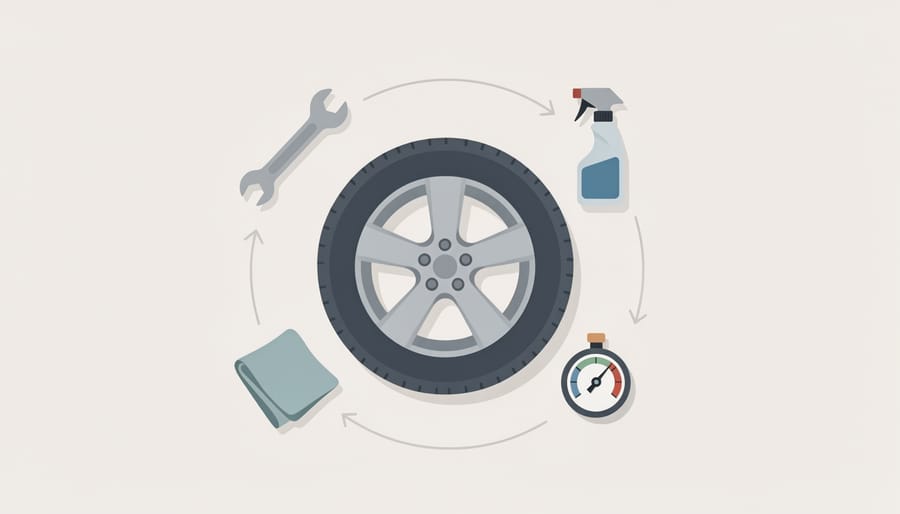
The maintenance mindset transforms how we relate to our vehicles, replacing the culture of disposability with one of stewardship. By protecting existing vehicles through proactive care, energy-conscious owners make a tangible contribution to environmental sustainability while reaping measurable economic benefits. This approach recognizes that the most sustainable vehicle is often the one already in your driveway, provided you commit to maintaining it properly.
Every oil change, tire rotation, and battery health check represents a choice. Not simply a choice between neglect and care, but between perpetuating a cycle of resource extraction and embracing a more circular approach to transportation. The embodied energy in your current vehicle, whether a decade-old sedan or a recent EV, represents thousands of kilowatt-hours and tons of raw materials already committed. Extending its useful life through systematic maintenance honors that investment and delays the environmental cost of manufacturing a replacement.
This philosophy aligns naturally with broader renewable energy adoption. Owners who install solar panels, monitor their home energy consumption, and seek efficiency improvements rarely stop at their doorstep. They extend the same values-driven thinking to their vehicles, recognizing that true energy consciousness encompasses all major assets. Vehicle maintenance becomes part of an integrated approach to reducing personal environmental impact.
The transition to cleaner transportation systems will take decades. During this period, millions of existing vehicles will remain on roads worldwide. How we care for them matters enormously. Well-maintained vehicles emit fewer pollutants, consume less fuel, and avoid premature landfill disposal. They bridge the gap between today’s mixed fleet and tomorrow’s fully renewable transportation infrastructure.
Your vehicle is not a disposable commodity awaiting its next replacement cycle. It is a complex machine representing significant material and energy resources, capable of delivering value for many years when treated as worthy of care.