
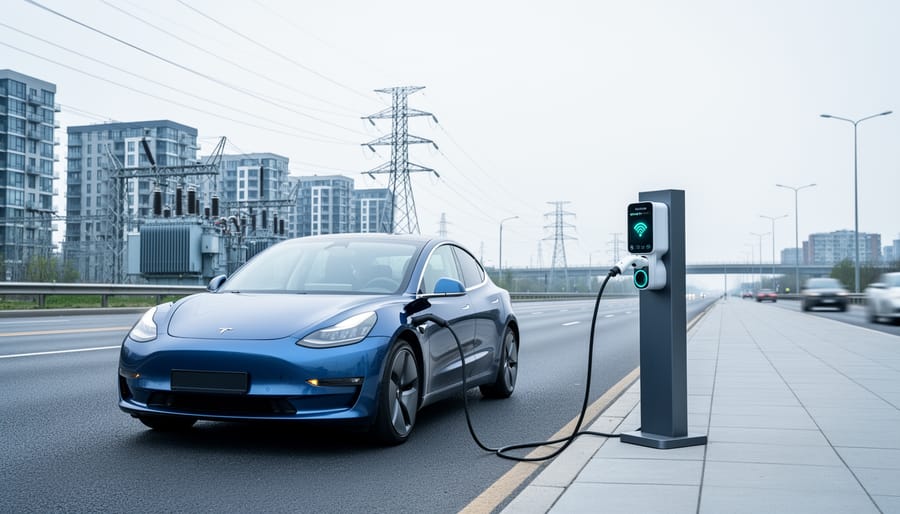
Vehicle infrastructure for electric mobility encompasses far more than roadside charging stations. It requires coordinated development of electrical grid capacity, smart energy management systems, physical installation networks, and supporting digital platforms that together enable millions of vehicles to transition from fossil fuels to electricity. The challenge lies not in any single component but in synchronizing grid upgrades, zoning policies, installation workforces, payment systems, and vehicle-to-grid integration across fragmented regional markets.
As of 2026, the gap between electric vehicle adoption rates and infrastructure readiness remains the central bottleneck in most markets. While charging hardware technology has matured considerably, the underlying systems that deliver power, manage demand peaks, and ensure equitable access still lag. Cities face transformer capacity limits in residential neighborhoods. Highway corridors struggle with inconsistent fast-charging coverage. Apartment dwellers confront installation barriers that detached-home owners never encounter. These aren’t problems solved by deploying more chargers alone.
Successful infrastructure deployment requires understanding the complete stack: generation capacity to meet new electrical load, transmission and distribution upgrades to deliver that power where vehicles actually park, physical site development with proper permitting and grid connections, and operational layers including payment processing, maintenance networks, and real-time availability data. Different regions have adopted strikingly different approaches, from Norway’s aggressive public investment model to China’s manufacturing-led rollout to North America’s fragmented private-public partnerships.
This analysis examines the full infrastructure ecosystem, comparing deployment strategies across major markets, identifying the technical and regulatory obstacles that slow progress, and exploring emerging solutions from bidirectional charging to wireless power transfer that may reshape requirements in the coming decade.
The Infrastructure Gap: What Vehicle Infrastructure Really Means for E-Mobility
When we talk about vehicle infrastructure for e-mobility, most people immediately picture charging stations. That narrow view captures only a fraction of the transformation actually required. Vehicle infrastructure encompasses the entire physical and digital ecosystem that supports transportation, and nearly every component designed for internal combustion vehicles proves inadequate for electric alternatives.
Start with parking facilities. Traditional parking structures weren’t built anticipating that every vehicle would need electrical connections. Retrofitting multi-story car parks with sufficient power distribution, circuit protection, and metering systems requires electrical capacity upgrades that often exceed the building’s original power supply. Underground garages face additional challenges with ventilation systems designed for exhaust fumes rather than electrical equipment, along with weight load calculations that never considered wall-mounted charging units throughout the facility.
Road networks themselves demand reconsideration. Electric commercial vehicles, particularly trucks and buses, carry battery packs weighing several thousand pounds more than equivalent diesel powertrains. This concentrated weight accelerates pavement degradation in ways highway engineers didn’t anticipate when setting current maintenance schedules. Some jurisdictions are already revising road surface specifications and resurfacing timelines based on projected electric fleet penetration rates.
Maintenance infrastructure presents equally fundamental mismatches. Service bays designed for oil changes, transmission work, and exhaust system repairs become obsolete. Electric vehicles need high-voltage safety equipment, specialized diagnostic tools, and technicians trained in electrical systems rather than mechanical repairs. Existing service stations either invest heavily in retooling or risk irrelevance as the fleet composition shifts.
Grid connection points represent perhaps the most critical infrastructure gap. The electrical distribution network extending to homes, businesses, and public spaces was sized for lighting and appliances, not transportation energy. A single fast-charging station can demand more power than an entire neighborhood. Upgrading transformers, substations, and distribution lines to handle transportation electrification requires years of planning and construction, work that must happen now to support vehicles arriving over the next decade.
Even navigation and signage systems need updates. Drivers require real-time information about charging availability, connector types, and power levels, data that doesn’t exist in traditional wayfinding infrastructure.
This systemic incompatibility explains why infrastructure expansion lags so dramatically behind vehicle readiness.
Charging Infrastructure: The Most Visible Challenge
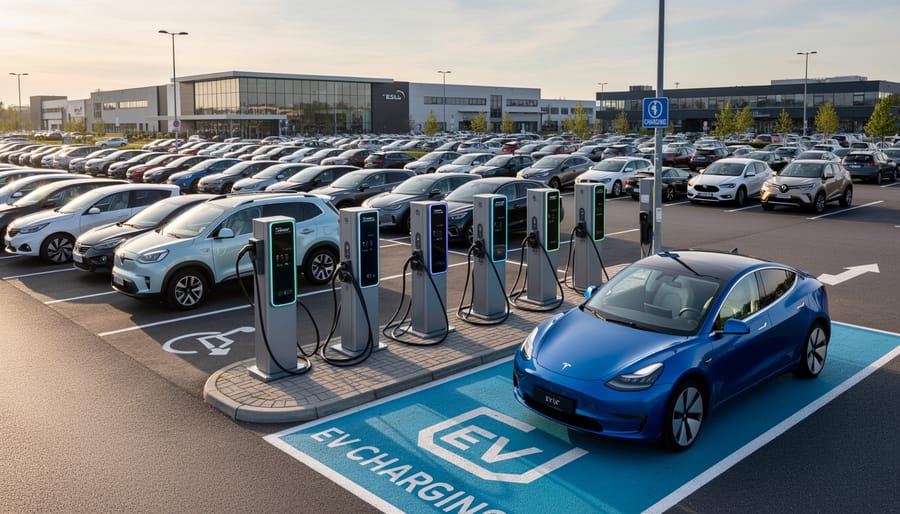
The Last-Mile Problem in Urban Centers
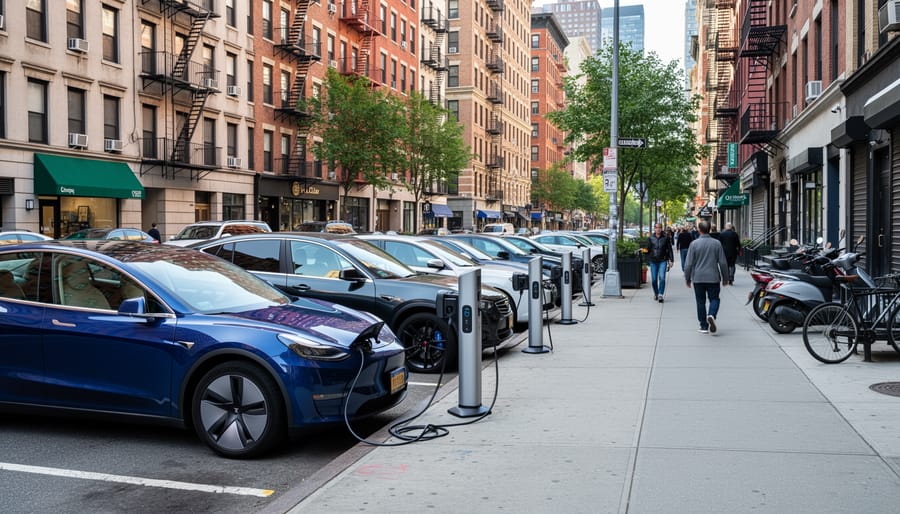
In cities where apartment buildings outnumber single-family homes, EV ownership hits a practical wall: nowhere to plug in overnight. A driver with a driveway can top up at home for pennies per kilowatt-hour; an urban renter circling the block for street parking faces a starkly different reality. This divide creates an infrastructure inequality that pricing incentives and vehicle subsidies cannot fix, without accessible charging, the urban majority remains locked out of e-mobility.
Curbside charging pilots offer one promising route. Cities from Seattle to Amsterdam are retrofitting existing streetlight poles and parking meters with Level 2 outlets, bringing charging directly to on-street spaces. These installations avoid the cost and disruption of trenching new power lines, leveraging infrastructure already in place. The challenge lies in scale: a neighborhood with a hundred street-parked vehicles needs dozens of charge points, not a handful, and allocating limited curb space between charging, loading zones, and general parking sparks fierce local debate.
Shared charging hubs in parking garages and public lots provide higher-density solutions, but they require residents to walk several blocks and move their cars mid-charge, an inconvenience that undermines the convenience EVs promise. Some European cities are testing permit systems that reserve curbside chargers for local residents during overnight hours, though enforcement remains complex. Until urban charging becomes as routine as finding a parking spot, city dwellers will remain hesitant adopters, and the infrastructure gap between suburban and urban EV access will widen rather than close.
Highway Corridors and Range Anxiety
Strategic charging infrastructure along highways represents the critical link between urban EV adoption and true mass-market viability. When drivers cannot confidently plan long-distance trips, electric vehicles remain constrained to local commuting, a psychological barrier that technical range improvements alone cannot overcome.
The distribution pattern matters as much as total charger count. A highway corridor needs fast-charging stations spaced at intervals matching typical EV range under worst-case conditions: winter driving, highway speeds, and aging batteries. Industry analyses suggest maximum spacing of 50-80 kilometers to eliminate range anxiety, yet many routes still feature gaps exceeding 150 kilometers between charging points.
Coverage density varies dramatically by region. Norway’s E6 highway offers charging every 50 kilometers on average, while portions of Australia’s interior highways remain entirely unserved. These gaps create “EV deserts” where electric vehicles simply cannot travel, fragmenting national road networks into disconnected islands of EV-accessible territory.
Fast-charging corridors face unique operational challenges. Highway locations require high-power infrastructure, typically 150-350 kW units, to minimize dwell time during trips, demanding grid connections that rural areas often cannot support without substantial upgrades. Peak travel periods create queuing problems at popular routes, where insufficient charger density transforms what should be 20-minute stops into hour-long waits.
The infrastructure gap persists not from technical impossibility but from coordination failures between energy providers, property owners, and transport authorities across jurisdictional boundaries.
Grid Integration and Energy Distribution Networks
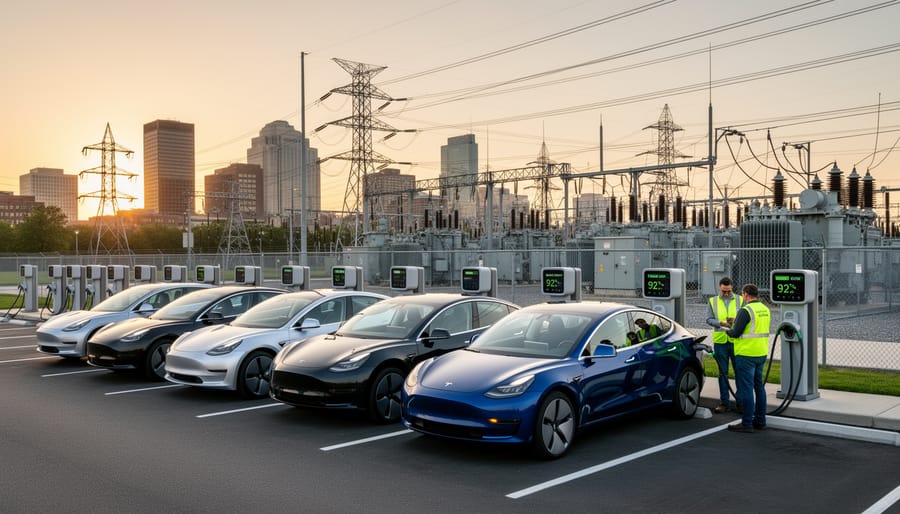
The electric grid represents the invisible foundation of e-mobility infrastructure, yet most regions operate networks designed for predictable, steady consumption patterns rather than the sharp, concentrated loads that electric vehicle charging creates. When a single fast-charger draws 350 kW, equivalent to powering dozens of homes simultaneously, the cumulative effect of multiple charging stations can overwhelm local distribution networks not built for such demand spikes. This mismatch between existing grid capacity and EV charging requirements has emerged as a fundamental constraint on charging infrastructure deployment, often determining where stations can feasibly be installed regardless of consumer demand or strategic planning.
Distribution network upgrades require substantial capital investment that utility providers typically recover over decades through rate structures, creating inherent tension between the rapid pace of EV adoption and the conservative planning horizons of electrical utilities. Transformer capacity at the neighborhood level frequently becomes the first bottleneck, as older substations serving residential areas were designed assuming average household loads of 3-5 kW, while a home Level 2 charger adds 7-19 kW and multiple EVs on a single street can push equipment beyond rated capacity. Utility providers must balance immediate upgrade costs against uncertain adoption curves, often resulting in reactive rather than anticipatory infrastructure expansion.
Smart grid technology offers partial solutions through demand response systems that coordinate charging times to avoid peak periods, effectively spreading the load across hours when grid capacity sits underutilized. Advanced metering infrastructure enables real-time monitoring and dynamic load management, allowing charging networks to throttle power delivery when grid stress reaches critical thresholds. Integration with smart grid renewable support systems creates opportunities to align charging demand with solar and wind generation patterns, though this requires sophisticated coordination between charging operators, utilities, and grid management authorities that remains uncommon in most markets.
The coordination challenge extends beyond technology to regulatory frameworks, rate structures, and interconnection agreements that were never designed for distributed energy resources operating at the scale charging networks require. Time-of-use pricing mechanisms can incentivize off-peak charging, but they depend on communication protocols between vehicles, chargers, and grid operators that lack universal standards. Vehicle-to-grid capabilities introduce bidirectional power flows that current grid management systems struggle to accommodate, requiring fundamental rethinking of how distribution networks operate rather than simple capacity additions to existing infrastructure.
Road Infrastructure Adaptations for Electric Fleets
Electric vehicles weigh 20-30% more than their combustion counterparts, presenting engineers with pavement challenges that demand rethinking road design fundamentals. Battery packs add 500-1,000 kilograms per passenger vehicle, while electric delivery vans and buses push even higher weight thresholds onto surfaces engineered decades ago for lighter loads.
Asphalt degradation accelerates under this increased mass, particularly on urban routes with frequent stop-and-go traffic where EVs concentrate their weight during braking and acceleration. Cities like Oslo and Amsterdam now specify thicker asphalt layers and reinforced base courses for high-traffic corridors, adding 15-20% to construction costs but extending pavement life by factoring in fleet electrification projections through 2035.
Several jurisdictions experiment with dedicated EV lanes, though approaches vary widely. California’s pilot programs reserve carpool lanes for zero-emission vehicles during peak hours, creating fast-moving corridors that reduce range anxiety. Seoul takes a different approach, designating lanes equipped with wireless charging infrastructure that powers vehicles as they drive.
These dynamic charging systems, tested in stretches of highway in Sweden and South Korea, embed electromagnetic coils beneath the road surface to transfer energy to receiver-equipped vehicles. Pilots demonstrate 20-kilowatt power transfer at highway speeds, potentially eliminating the need for massive batteries by enabling continuous charging during transit. Current installations remain expensive at roughly $1.2 million per kilometer, but costs decline as deployment scales and the technology integrates with clean electricity supply networks.
Weight restrictions on bridges and elevated roadways require updating as well. Infrastructure managers now assess load ratings against projected EV adoption curves, prioritizing reinforcement of structures carrying commercial routes where electric trucks will concentrate. Germany’s federal highway authority now mandates EV weight scenarios in all major bridge rehabilitation projects, recognizing that infrastructure built today must accommodate tomorrow’s heavier electric fleets.
Commercial Fleet Infrastructure: The B2B Transformation
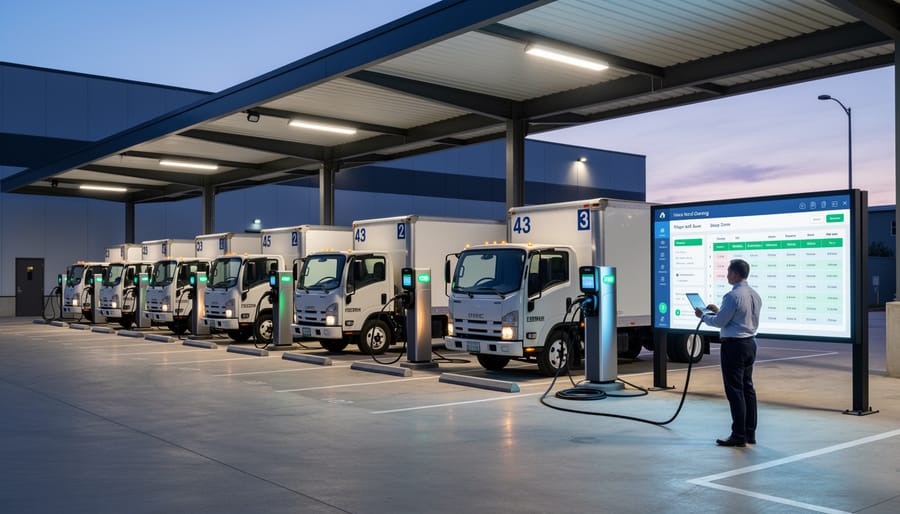
Commercial fleet electrification presents infrastructure challenges fundamentally different from consumer EV adoption, requiring purpose-built solutions that accommodate concentrated charging demand, predictable route patterns, and the operational economics of business transport. Unlike individual EV owners who charge opportunistically throughout the day, commercial fleets return to central depots on fixed schedules, creating intense power demand spikes that can overwhelm unprepared electrical systems.
Depot charging facilities form the backbone of fleet electrification infrastructure. Logistics companies and transit agencies are converting maintenance yards into high-power charging hubs, often requiring electrical service upgrades from 480V to medium-voltage systems capable of delivering megawatts of power simultaneously. A single depot serving 50 electric delivery vans might demand more electricity than a small neighborhood, necessitating dedicated substations and transformers that can cost hundreds of thousands of dollars before the first charging stall is installed.
The infrastructure requirements for commercial fleet operations differ substantially from public charging networks:
- High-power capacity: 350kW to 1MW+ for heavy-duty vehicles versus 50-150kW for passenger cars
- Overnight charging windows: Infrastructure designed for 4-8 hour charging cycles aligned with shift schedules
- Load management systems: Smart charging software to sequence vehicle charging and prevent demand spikes
- Physical space modifications: Expanded parking areas with overhead charging gantries or drive-through charging lanes
- Backup power systems: Redundancy to prevent operational disruption from charging equipment failures
Heavy-duty charging for trucks and buses introduces additional complexity. Transit agencies deploying electric bus fleets are installing pantograph charging systems at route terminals, enabling rapid top-up charging during driver breaks. Long-haul trucking faces an infrastructure puzzle that consumer EVs don’t: megawatt charging stations capable of replenishing 500+ mile range within mandatory driver rest periods, requiring electrical infrastructure comparable to small industrial facilities at truck stops and distribution centers.
The timing coordination between fleet operations and grid capacity creates opportunities for cost optimization through managed charging programs. Companies are partnering with utilities to shift charging to off-peak hours, reducing demand charges that can represent 30-50% of commercial electricity costs. Some forward-thinking operations are integrating on-site solar arrays and battery storage, creating microgrids that reduce grid dependence while providing resilience against power disruptions. The infrastructure investment is substantial, often exceeding the cost differential between electric and diesel vehicles, but the operational savings and regulatory pressures are driving rapid transformation across commercial transport sectors globally.
Global Approaches: How Different Regions Are Solving the Infrastructure Challenge
Europe has emerged as a testing ground for integrated infrastructure planning, where EU-level mandates work alongside national implementation strategies. The Alternative Fuels Infrastructure Regulation requires member states to install fast chargers every sixty kilometers on major highways by 2026, creating a binding framework that eliminates the voluntary approach that plagued early expansion efforts. Countries like Norway and the Netherlands pioneered dense urban charging networks through municipal parking integration, demonstrating that treating charging as public utility infrastructure rather than private amenity accelerates deployment. Germany’s approach combines industrial partnerships, automakers co-funding networks, with grid operator coordination, ensuring that electrical capacity precedes charging hardware installation rather than creating bottlenecks afterward.
North America faces the dual challenge of vast distances and fragmented regulatory authority. The United States federal infrastructure legislation allocated substantial funding, but implementation varies wildly by state. California’s regulatory model, mandating charging readiness in new construction and retrofit requirements for existing buildings, contrasts sharply with states offering minimal incentives. Canada’s focus on northern and rural corridors addresses range anxiety in ways European models don’t accommodate, deploying renewable-powered stations where grid connections prove impractical. Tesla’s proprietary Supercharger network initially succeeded where government efforts stalled, though standardization pressure is now reshaping that landscape.
China’s centralized planning enables infrastructure deployment at unprecedented scale and speed. State-owned utilities built over two million public charging points within a decade, treating infrastructure as essential national development rather than market-driven opportunity. The government’s top-down approach eliminates permitting delays and coordinates grid upgrades with charging installation, though quality and utilization rates vary significantly across provinces. Urban areas see charging integrated into new residential developments as mandatory infrastructure, while rural expansion follows industrial policy priorities rather than immediate demand.
Emerging markets are leapfrogging traditional models entirely. India’s battery-swapping focus for two- and three-wheelers sidesteps grid capacity limitations, creating standardized battery networks instead of stationary charging infrastructure. Several African nations are deploying solar-powered charging hubs that function off-grid, combining e-mobility infrastructure with rural electrification goals. These markets demonstrate that infrastructure solutions must align with existing electrical capacity, vehicle types, and usage patterns rather than importing high-income country models wholesale.
The most successful approaches share common elements: regulatory certainty, coordinated grid planning, and recognition that infrastructure investment must precede rather than follow vehicle adoption to avoid the chicken-and-egg paralysis that has stalled transitions elsewhere.
Financing and Policy Mechanisms Driving Infrastructure Growth
The staggering capital requirements for vehicle infrastructure, estimated at over $2 trillion globally through 2030, demand financing mechanisms that transcend traditional public funding models. Public-private partnerships have emerged as the dominant framework, leveraging government guarantees and regulatory certainty to attract private capital into what might otherwise appear too risky or slow-yielding for commercial investors. In Germany, the TOTAL and Shell networks expanded rapidly through contracts guaranteeing minimum charging volumes, effectively shifting demand risk from operators to municipalities while accelerating deployment timelines.
Government incentives take multiple forms beyond direct subsidies. Tax credits for infrastructure installation, accelerated depreciation schedules, and grant programs targeting underserved corridors have proven effective in markets from California to Norway. The U.S. Infrastructure Investment and Jobs Act allocated $7.5 billion specifically for EV charging networks, structuring funds to prioritize disadvantaged communities and interstate corridors where private investment alone would lag. Meanwhile, regulatory mandates create guaranteed demand: requirements that new buildings include charging capacity or that fuel retailers add electric infrastructure establish baseline deployment regardless of immediate profitability.
The ROI challenge remains substantial. Public charging stations typically require seven years to achieve profitability under current utilization rates, a timeline that deters purely commercial ventures. Innovative financing addresses this through bundled infrastructure packages that combine high-traffic locations with lower-demand sites, cross-subsidizing expansion. Some operators integrate renewable generation directly, pairing solar canopies or connections to wind power for grid stability with charging infrastructure to reduce operational costs and improve margins over time.
Revenue stacking represents another emerging model, where charging stations generate income from multiple sources: electricity sales, advertising on screens, retail partnerships at charging sites, and grid services through demand response programs. Norway’s success demonstrates how coordinated policy can compress payback periods, exempting charging infrastructure from certain property taxes while mandating workplace charging created sufficient volume to justify private investment within three-year horizons.
The tension between rapid deployment and financial sustainability persists. Markets relying solely on private capital see concentrated infrastructure in profitable urban centers, while government-led approaches risk inefficient allocation. The most effective models appear to combine public funding for foundational networks with competitive frameworks allowing private operators to optimize and expand from that base, creating infrastructure that serves public mobility goals while achieving eventual commercial viability.
The Path Forward: Integration, Standardization, and Smart Systems
The future of e-mobility infrastructure hinges on three transformative shifts that move beyond the piecemeal deployment models currently dominant in most markets. Universal charging standards, intelligent systems integration, and bidirectional energy flows represent the technical evolution needed to transform charging infrastructure from a collection of isolated networks into a cohesive, efficient ecosystem. The International Organization for Standardization and CharIN consortium have made significant progress toward interoperability through the Combined Charging System (CCS) and the emerging ISO 15118 communication protocol, which enables plug-and-charge authentication and smart energy management. However, regional fragmentation persists, with North America’s NACS connector gaining momentum alongside Europe’s CCS2 and China’s GB/T standard, creating continued uncertainty for manufacturers and infrastructure investors.
Vehicle-to-grid technology represents perhaps the most paradigm-shifting innovation on the immediate horizon, transforming EVs from passive energy consumers into distributed storage assets that stabilize electrical grids. Bidirectional charging systems allow vehicles to discharge power back to the grid during peak demand periods or supply homes during outages, creating economic incentives for EV ownership while providing grid operators with flexible capacity. Pilot programmes in Denmark, the Netherlands, and California have demonstrated that aggregated EV batteries can provide frequency regulation and demand response services worth hundreds of dollars annually per vehicle, though regulatory frameworks in most jurisdictions have yet to establish clear compensation mechanisms or grid connection standards for these services.
Artificial intelligence and machine learning are revolutionizing infrastructure planning by analyzing vast datasets of traffic patterns, energy consumption, grid constraints, and demographic trends to identify optimal charging station locations with unprecedented precision. Companies like Enel X and Shell Recharge are deploying predictive algorithms that forecast future demand hotspots years in advance, enabling proactive infrastructure deployment rather than reactive gap-filling. These systems consider factors traditional planning overlooks, such as commuting patterns evolving with remote work adoption, seasonal tourism flows, and the cascading effects of new residential or commercial developments. Equally critical is renewable energy integration directly with charging infrastructure through co-located solar canopies, battery storage systems, and wind power connections that reduce grid strain while lowering operational costs and carbon intensity.
The convergence of these technologies creates infrastructure that is self-optimizing and resilient. Smart charging algorithms coordinate when vehicles draw power based on grid conditions and renewable generation availability, shifting demand to match supply rather than forcing grid expansion to meet peak loads. This integration transforms infrastructure from static assets into dynamic systems that improve efficiency over time, learning usage patterns and adapting to changing conditions without human intervention.
The electric revolution stands poised at a critical juncture. Vehicles are ready. Battery technology has matured. Consumer interest is rising. Yet the infrastructure to support mass adoption lags dangerously behind, creating a bottleneck that no amount of technological advancement can overcome alone.
This disconnect reveals a fundamental truth: infrastructure development, not vehicle capability, will dictate the pace of e-mobility transition over the next decade. We can engineer faster charging batteries and more efficient motors, but without coordinated grid upgrades, strategically placed charging networks, and adapted road systems, these innovations remain underutilized. The challenge extends beyond simply installing more chargers. It requires reimagining our entire transportation ecosystem, from how we generate and distribute electricity to how we design cities and plan commercial logistics.
Success demands three critical elements working in concert. First, coordinated planning that brings together utilities, automakers, governments, and urban developers before deployment rather than reacting to bottlenecks after they emerge. Second, sustained investment recognizing that infrastructure returns materialize over decades, not quarters. Third, innovative thinking that integrates renewables and charging infrastructure from the ground up, creating systems that support rather than strain electrical grids.
The electric future is inevitable. How quickly we arrive depends entirely on whether infrastructure growth can match the accelerating pace of vehicle adoption.