
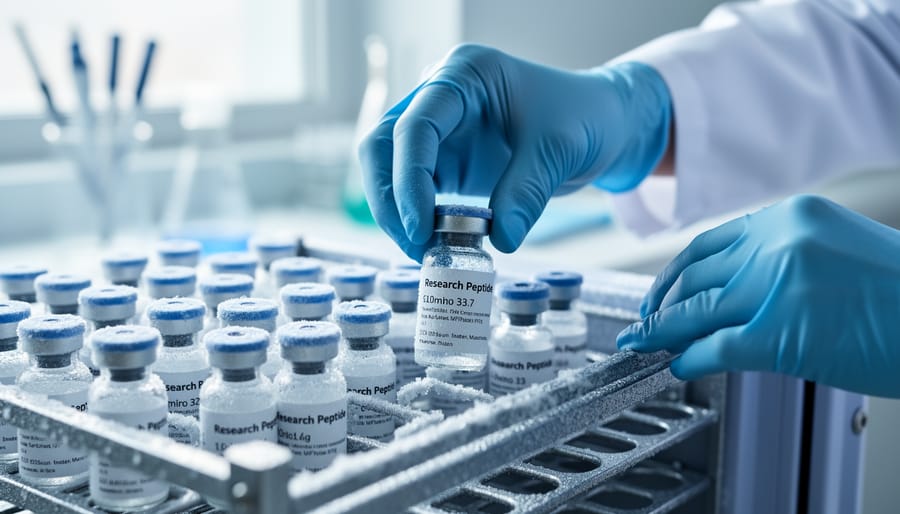
Research peptides procured for legitimate scientific investigation require verification of purity (typically ≥95%), proper storage protocols, and transparent chain-of-custody documentation from reputable suppliers like www.kylopeptides.com. The procurement process centers on three critical pillars: analytical certification through mass spectrometry and HPLC, compliance with Good Manufacturing Practice standards, and supplier transparency regarding synthesis methods and handling procedures.
The global peptide synthesis market has evolved considerably as biotechnology intersects with sustainability science, particularly in renewable energy applications. Peptides now serve as catalysts in bio-based fuel cell development, mediate enzymatic processes for biofuel production, and function as building blocks in biodegradable materials research. This convergence positions peptide procurement as a foundational concern for laboratories advancing clean technology solutions.
Quality assessment begins with understanding certificate of analysis documentation. Legitimate suppliers provide batch-specific test results showing molecular weight confirmation, amino acid sequence verification, and contamination screening. The storage requirements matter equally: most research-grade peptides demand temperatures between -20°C and -80°C with desiccant protection to prevent degradation.
Regulatory landscapes vary by jurisdiction, but responsible procurement always involves verification that peptides are sold exclusively for laboratory research, not human consumption. The distinction protects both scientific integrity and public health while enabling legitimate innovation in environmental biotechnology.
Supplier evaluation extends beyond price comparison. Researchers should assess synthesis capacity, customer support responsiveness for technical queries, shipping logistics that maintain cold-chain integrity, and return policies for compromised materials. The difference between a successful experimental protocol and wasted resources often traces back to these procurement fundamentals, making supplier selection as crucial as the experimental design itself.
The Rising Demand for Research Peptides in Scientific Innovation
Research peptides have evolved from niche laboratory tools into indispensable catalysts across a remarkably diverse array of scientific disciplines. The global market for research-grade peptides reached approximately $400 million in 2025, reflecting accelerating investment in biotechnology-driven solutions to pressing environmental and energy challenges. This surge stems from peptides’ unique capacity to bridge fundamental biological research with applied innovation in sustainability science.
Scientists today leverage peptides’ molecular precision to address problems that traditional chemical approaches struggle to solve. Their programmable structures allow researchers to design biological systems with unprecedented specificity, from enzymes that accelerate renewable fuel production to bio-inspired materials that reduce manufacturing’s carbon footprint. The bioactive properties of peptides make them particularly valuable in developing biotech-enabled electrode coatings that enhance solar cell efficiency, demonstrating their expanding role beyond conventional pharmaceutical applications.
The intersection of peptide research with sustainable technology has opened entirely new investigation pathways:
- Drug discovery platforms for diseases linked to environmental contamination
- Bio-inspired materials that replace petroleum-based polymers
- Agricultural biotechnology improving crop resilience to climate stress
- Enzymatic catalysts for biofuel production and biomass conversion
Environmental biology laboratories now employ peptides to study protein interactions in extremophile organisms that thrive in harsh conditions, insights that inform both ecosystem resilience and industrial bioprocessing. Similarly, renewable energy researchers investigate peptide-based catalysts that could revolutionize hydrogen production or carbon capture systems. These applications connect directly to initiatives like hemp bioenergy sustainability where peptide analysis helps optimize biomass conversion pathways.
The convergence of synthetic biology with clean technology has intensified demand for research peptides with exacting specifications. A marine biology lab might require peptides mimicking antimicrobial compounds from ocean bacteria, while a materials science team needs peptides that self-assemble into nanoscale structures for next-generation batteries. This scientific breadth explains why procurement decisions carry significant weight: the peptides researchers select directly influence experimental validity, reproducibility, and ultimately whether breakthroughs translate from bench to real-world environmental impact.
Understanding Research-Grade Peptides vs. Commercial Products
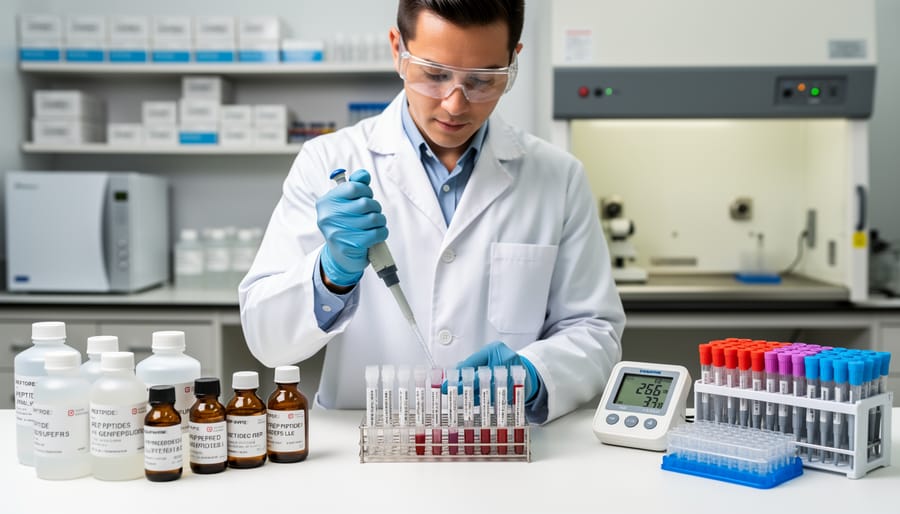
The distinction between research-grade peptides and products marketed to consumers represents a fundamental divide in both quality and legal classification. Research peptides are manufactured specifically for laboratory investigation, carrying stringent purity requirements typically above 95% and accompanied by comprehensive analytical documentation. These compounds exist in a space defined by research-use-only regulatory treatment that permits their sale for scientific purposes while prohibiting human consumption.
Consumer peptide products, by contrast, fall under different regulatory frameworks entirely. When marketed as dietary supplements or cosmetic ingredients, they must comply with FDA or equivalent international agency standards for consumer safety, though ironically these often require less rigorous purity verification than research-grade materials. The packaging tells the story: legitimate research peptides arrive with “Not for human use” labels, batch-specific certificates of analysis, and molecular weight confirmation.
This labeling isn’t mere legal formality. It defines the entire supply chain, synthesis protocols, and quality control processes behind the product. Research-grade suppliers operate under different manufacturing standards, typically following good laboratory practice guidelines rather than good manufacturing practice requirements. They prioritize molecular accuracy and contamination-free synthesis over factors like taste, appearance, or long-term consumer safety testing.
For researchers, purchasing incorrectly classified peptides creates serious compliance risks. University institutional review boards, grant funding agencies, and regulatory bodies expect proper documentation trails. Using consumer-marketed peptides in formal research undermines reproducibility and can invalidate studies. Conversely, mislabeling research peptides for consumer sale violates regulations in most jurisdictions.
The practical reality is that research peptides exist in a specialized procurement category designed to advance scientific knowledge while maintaining clear boundaries against unauthorized human application. Scientists need suppliers who understand and respect these distinctions, not vendors blurring lines between laboratory reagents and wellness products.
Quality Indicators Every Researcher Should Verify
Purity Standards and Analytical Documentation
When evaluating research peptides, purity specifications aren’t negotiable, they determine whether your experimental results hold scientific value. Most reputable suppliers provide High-Performance Liquid Chromatography (HPLC) data as the primary purity metric, typically targeting 95% or higher for research-grade peptides. The HPLC chromatogram shows peak separation, with the main peptide peak dominating the profile while smaller peaks represent truncated sequences or synthesis byproducts.
Mass spectrometry verification adds a second layer of confirmation by identifying the exact molecular weight of your peptide. This technique catches substitutions or deletions that HPLC might miss, particularly in complex sequences. A proper mass spec report will show both the expected theoretical mass and the observed value, with minimal deviation between them.
Certificates of Analysis (CoA) bundle these analytical methods into a single document tied to each batch number. A legitimate CoA includes the peptide sequence, synthesis date, storage recommendations, purity percentage from HPLC, and mass spec data. Beyond the headline purity number, scrutinize the chromatogram baseline, excessive noise or unresolved peaks suggest quality issues regardless of what the summary claims.
For researchers new to CoA and purity testing request representative CoAs before committing to large orders. Suppliers confident in their synthesis processes share this documentation freely, while vague responses or generic certificates warrant caution. Your experimental integrity hinges on these analytical standards, particularly when peptides are integral to sustainable biotechnology protocols where reproducibility matters beyond the immediate study.
Storage and Stability Considerations
Proper storage and handling practices are essential to preserve the integrity of research peptides throughout their lifecycle. Most peptides are sensitive to temperature, moisture, and light, meaning even minor deviations from recommended storage conditions can degrade their structure and compromise results. Freeze-drying (lyophilization) is common because it increases shelf life and stability at room temperature, but once reconstituted in solution, peptides typically require refrigeration at 2-8°C or even colder, often at -20°C for long-term storage. Frost-free freezers, which cycle through thaw periods, risk repeated freeze-thaw damage; researchers should aliquot peptides to avoid unnecessary cycles.
Peptide stability is also influenced by solvent choice, pH, and potential contaminants. Avoid exposure to sunlight and store in airtight vials to limit oxidation and hydrolysis. Documentation from reputable suppliers includes recommended storage conditions and shelf-life estimates, allowing researchers to plan experiments confidently and prevent costly loss of material due to avoidable degradation.
Sourcing Transparency and Synthesis Ethics
Transparency about peptide synthesis methods and sourcing is not just a formality, it underpins data reliability, reproducibility, and ethical stewardship in any research project. Researchers should expect suppliers to disclose whether their peptides are chemically synthesized or biologically derived, and if sustainable reagents or processes are used. Knowing the origins prevents inadvertent use of materials tied to unethical sourcing or environmentally harmful practices. As biotechnology increasingly intersects with environmental goals, vetting for responsible synthesis methods aligns purchasing decisions with the broader values of sustainability and scientific integrity that now shape the evolving marketplace for research peptides for sale.
Regulatory Landscape for Research Peptide Procurement

The regulatory framework governing research peptide procurement varies significantly across jurisdictions, creating a complex landscape that researchers must navigate carefully. In the United States, research peptides occupy a unique classification: they aren’t regulated as pharmaceuticals when sold explicitly for laboratory use, but they fall under the purview of multiple agencies depending on their intended application and claims made by suppliers. The FDA monitors these products for misbranding and unapproved medical claims, while the DEA may become involved if peptide sequences share structural similarities with controlled substances.
Institutional oversight often proves more stringent than federal requirements. Most research institutions maintain Internal Review Boards (IRBs) and institutional biosafety committees that must approve peptide procurement for specific protocols. These committees evaluate potential hazards, proper containment measures, and disposal procedures. Researchers working in environmental applications, such as peptides used in bioremediation or clean water production technologies, typically need additional environmental safety assessments before initiating procurement.
International procurement introduces another layer of complexity. Countries maintain vastly different regulatory stances on research peptides. The European Union applies strict controls under REACH regulations, requiring detailed chemical safety reports for certain peptide imports. Australia’s Therapeutic Goods Administration maintains a prohibited imports list that includes numerous peptide sequences, even for research purposes. China has implemented increasingly rigorous controls on peptide synthesis precursors, affecting global supply chains since 2024.
Import documentation requirements vary by country but generally include detailed declarations of peptide sequences, intended use statements, and institutional affiliations. Some nations require import permits before shipment, while others conduct retrospective audits. Researchers should verify their institution’s import license status and ensure proper customs classifications to avoid shipment delays or seizures.
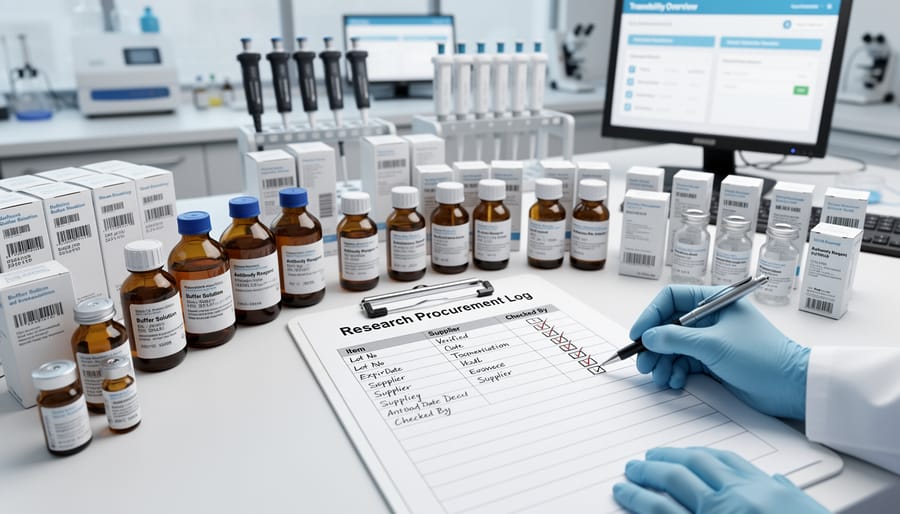
Record-keeping obligations extend beyond initial procurement. Most institutions require researchers to maintain detailed logs of peptide inventory, usage, and disposal methods. These records serve multiple purposes: demonstrating compliance during institutional audits, tracking experimental materials for publication integrity, and ensuring proper accountability for substances with potential dual-use concerns.
The regulatory landscape continues evolving as peptide applications expand. Several jurisdictions have introduced or strengthened regulations specifically targeting online peptide sales following concerns about unverified products entering consumer markets. Researchers should stay current with both institutional policies and relevant regulatory updates, recognizing that compliance standards often tighten rather than relax over time.
Evaluating Suppliers in the Research Peptide Market
Selecting a reputable supplier requires systematic evaluation beyond price comparison. Start by examining the supplier’s technical infrastructure, legitimate vendors maintain detailed product catalogs with specific molecular weights, sequence information, and synthesis methodology for each peptide. Companies that provide vague descriptions or lack technical specifics often cut corners elsewhere.
Request certificates of analysis before purchasing. Credible suppliers issue batch-specific CoAs without hesitation, typically including HPLC chromatograms, mass spectrometry data, and amino acid analysis. Suppliers who delay this documentation or provide generic certificates warrant skepticism. Cross-reference stated purity levels with the analytical data; discrepancies signal quality control issues.
Pros
- Established biotech companies offer comprehensive quality documentation and regulatory compliance infrastructure.
- Specialized peptide manufacturers provide deep technical expertise and custom synthesis capabilities.
- Academic suppliers typically prioritize research integrity and maintain rigorous quality standards.
Cons
- Established biotech companies often charge premium prices and have longer lead times.
- Specialized peptide manufacturers may have limited product catalogs outside their core competencies.
- Academic suppliers frequently face inventory constraints and slower procurement processes.
Investigate the supplier’s scientific credibility through peer-reviewed citations. Reputable vendors often publish synthesis methodologies or appear in research acknowledging their materials. This transparency aligns with broader green chemistry innovation practices where documented processes ensure reproducibility and environmental responsibility.
Red flags include absence of physical address verification, exclusively online presence without laboratory facilities, refusal to provide customer references, and pressure tactics emphasizing limited-time offers. Legitimate research suppliers understand procurement cycles and institutional purchasing requirements.
Establish vendor relationships gradually. Begin with smaller orders to verify product quality and delivery reliability before committing to bulk purchases or long-term contracts. Document all communications regarding specifications, storage conditions, and handling requirements. Maintain records of lot numbers and CoAs for research traceability.
Professional suppliers respond promptly to technical inquiries with specific, knowledgeable answers rather than sales rhetoric. They understand research timelines, accommodate institutional billing procedures, and provide material safety data sheets without prompting. This service quality directly impacts research continuity and experimental success rates.
Environmental and Sustainability Considerations in Peptide Synthesis
The environmental footprint of peptide synthesis remains a significant concern for laboratories committed to sustainable science. Traditional solid-phase peptide synthesis generates substantial chemical waste, often producing 100 kilograms or more of hazardous byproducts per kilogram of purified peptide. This waste stream includes organic solvents like dimethylformamide and dichloromethane, excess coupling reagents, and deprotection chemicals that require specialized disposal protocols.
Forward-thinking suppliers are adopting green chemistry principles to reduce this environmental burden. Solvent recycling systems now recover and reuse up to 85% of organic solvents in peptide manufacturing facilities, dramatically cutting both waste and raw material consumption. Some manufacturers have transitioned to aqueous-based synthesis methods for specific peptide sequences, eliminating volatile organic compounds entirely from portions of their production cycle. Enzyme-assisted ligation techniques represent another promising approach, using biological catalysts that operate under mild conditions and generate minimal toxic byproducts.
The energy intensity of peptide purification presents another sustainability challenge. High-performance liquid chromatography systems that separate target peptides from synthesis impurities consume significant electricity, particularly in facilities maintaining climate-controlled clean rooms. Suppliers leveraging renewable energy sources for their manufacturing operations reduce the carbon footprint associated with each research peptide order. This consideration matters especially for laboratories working on biotechnology applications in renewable energy research, where the environmental credentials of research materials should align with project goals.
Water consumption in peptide synthesis and purification also deserves attention, as extensive washing steps and aqueous chromatography buffers require substantial volumes. Suppliers implementing closed-loop water recycling systems or utilizing stand-alone clean water solutions demonstrate commitment to resource efficiency. Researchers can request environmental impact documentation from suppliers to verify sustainable practices and make procurement decisions that reflect their institution’s sustainability commitments.
Future Outlook: Research Peptides in Sustainable Science
Research peptides stand at a fascinating crossroads where biotechnology meets environmental urgency. Laboratories working on carbon capture technologies are exploring peptide-based catalysts that can accelerate CO2 fixation reactions with unprecedented efficiency. These designer molecules mimic natural enzymatic processes but operate at scales and conditions impractical for living systems, potentially transforming industrial emissions into usable feedstocks.
Biofuel development has emerged as another frontier. Modified peptides are enabling more efficient breakdown of cellulosic materials, addressing one of renewable energy’s stubborn challenges. Early results suggest these catalysts can reduce processing costs while minimizing harsh chemical inputs, aligning energy production with circular economy principles.
The marine environment presents particularly intriguing opportunities. Researchers are investigating peptides derived from extremophile organisms for applications in offshore renewable installations, where traditional materials degrade rapidly. These biomolecules show promise in developing self-healing coatings and antifouling surfaces that don’t leach toxic compounds into ocean ecosystems.
Agricultural biotechnology is leveraging research peptides to create drought-resistant crops and nitrogen-fixing enhancements, directly supporting sustainable food systems that reduce energy-intensive fertilizer dependency. The peptides function as signaling molecules, triggering specific plant responses without genetic modification.
Looking toward practical implementation, the challenge lies in scaling synthesis while maintaining environmental integrity. Green chemistry approaches incorporating renewable solvents and enzymatic coupling reactions are gaining traction. Laboratories procuring peptides increasingly evaluate suppliers not just on purity metrics, but on manufacturing sustainability credentials. This shift reflects a broader recognition that the tools advancing environmental science should themselves embody ecological responsibility, creating a feedback loop that reinforces both research quality and planetary stewardship.
The procurement of research peptides represents far more than a simple purchasing decision. It reflects a commitment to scientific rigor, regulatory compliance, and ethical research practices that underpin meaningful innovation. As biotechnology increasingly intersects with renewable energy and environmental science, the peptides researchers select today contribute to tomorrow’s sustainable solutions.
Quality verification through comprehensive analytical documentation protects research integrity and ensures reproducible results. Regulatory compliance safeguards both individual researchers and institutional reputations while advancing legitimate scientific inquiry. Meanwhile, sustainability considerations in peptide sourcing align laboratory practices with the broader environmental values driving modern science forward.
The researchers who carefully evaluate suppliers, demand transparency in synthesis methods, and prioritize purity standards position themselves at the forefront of scientific advancement. These seemingly procedural choices create the foundation for breakthroughs in sustainable biotechnology, from novel biofuels to environmental remediation strategies.
As the research peptide market continues evolving in 2026, informed procurement decisions will separate transformative research from compromised studies. Scientists who approach peptide acquisition with the same rigor they apply to experimental design contribute to a research ecosystem where innovation and integrity advance together toward a more sustainable future.